












We get it, got to test the 'waters'.
Grab a sample pack - usually $24.99
Just $22.49

Walk into any convenience store and you’ll see the same thing: shelves packed with energy drinks, all promising more energy, better focus, and improved performance.
Most people assume they’re all basically the same.
They’re not.
Two energy drinks can have the same caffeine content and deliver completely different results. One gives you smooth, sustained energy and better performance. The other gives you a quick spike, followed by a crash that leaves you worse off than when you started.
The difference comes down to how they’re built.
Most Energy Drinks Are Designed Backwards
The reality is that most energy drinks aren’t formulated for performance—they’re formulated for taste and cost.
That usually means:
- Cheap, fast-acting caffeine
- Artificial ingredients and sweeteners
- Underdosed or ineffective formulas
- No real support for focus or performance
They’re built to feel strong in the moment, not to help you perform over time.
That’s why so many people experience the same cycle:
Spike → Jitters → Crash → Repeat
Real Energy Is More Than a Stimulant
Energy isn’t just about how “wired” you feel.
If anything, feeling overstimulated is often a sign that something is off.
Real performance comes from a system working together:
- Sustained energy that doesn’t spike and crash
- Mental clarity so you can stay focused
- Blood flow and performance support so your body can actually execute
Most energy drinks only target one of these—and ignore the rest.
Where Most Energy Drinks Fall Short
The biggest issues with typical energy drinks are what’s missing.
There’s no real cognitive support.
There’s no performance-focused formulation.
And there’s often no verification of what’s actually in the can.
That last point matters more than people realize.
Without proper third-party testing, there’s no guarantee that what’s on the label is accurate—or safe for athletes.
That’s why certifications like Informed Sport exist. They ensure products are tested for banned substances and label accuracy, giving you confidence in what you’re consuming.
Most energy drinks don’t go through that process.
What Real Performance Energy Looks Like
A high-quality energy drink should do more than just wake you up—it should help you perform.
That means combining multiple elements into one system:
-
Sustained Energy
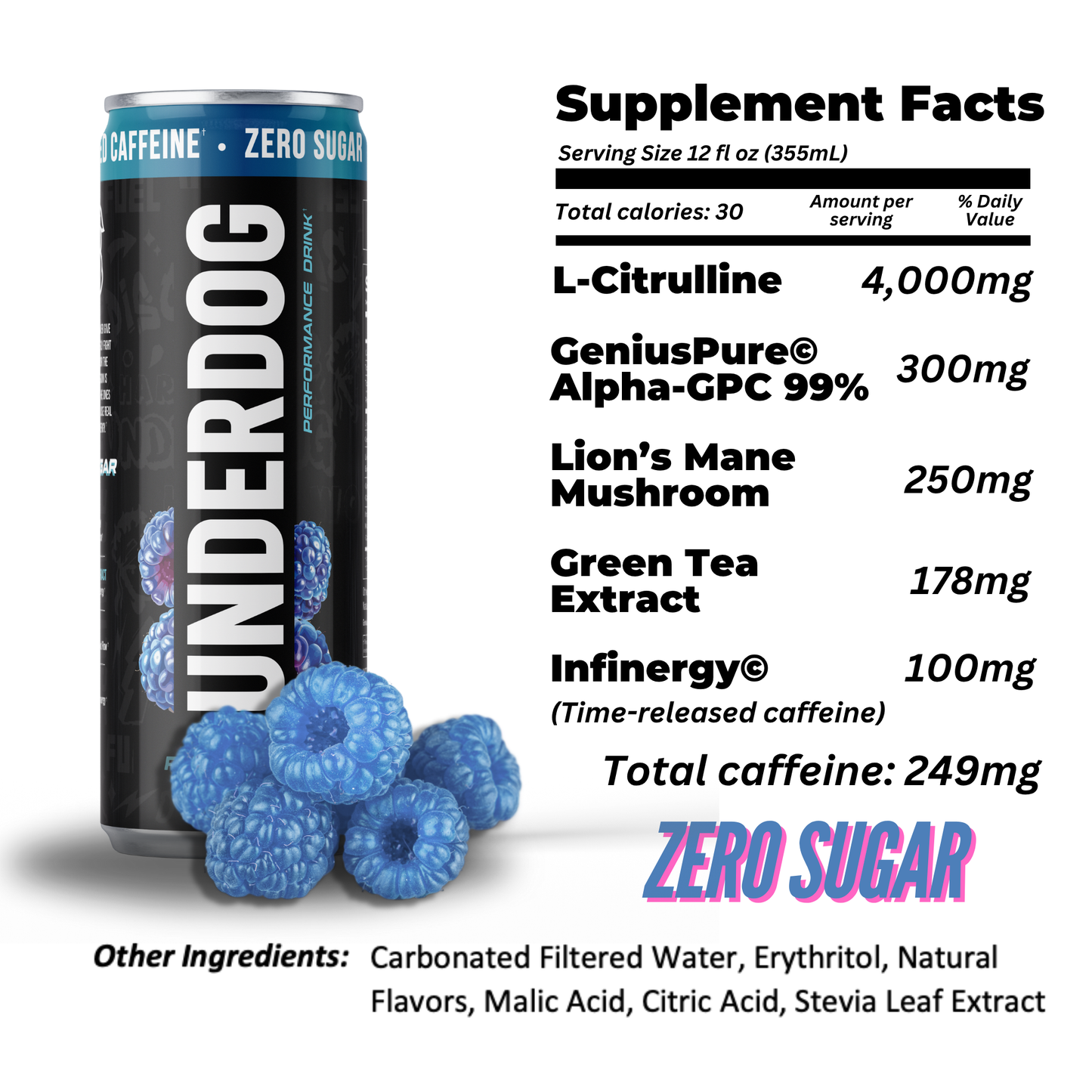
Using ingredients like di-caffeine malate and green tea extract helps provide a smoother, longer-lasting energy curve without the crash. -
Focus and Cognitive Support
Ingredients like Alpha GPC and lion’s mane help support mental clarity, reaction time, and overall cognitive performance. -
Performance and Blood Flow
Compounds like L-citrulline help improve circulation, which plays a role in endurance and output. -
Trust and Transparency
Third-party testing ensures that what’s on the label is exactly what you’re putting in your body.
When all of these are working together, you’re not just getting energy—you’re getting a tool for performance.
Use Energy Like a Tool—Not a Habit
One of the biggest mistakes people make isn’t just what they drink—it’s how they use it.
Energy drinks shouldn’t be something you sip all day out of habit.
They should be used intentionally:
- Before a workout
- Before competition
- Before deep, focused work
When used correctly—and when built correctly—energy becomes an advantage.
The Bottom Line
Not all energy drinks are built the same.
Some are designed to give you a quick feeling.
Others are designed to help you perform.
That difference shows up in your focus, your output, and how you feel after.
If you’re going to use energy, it should work for you—not against you.