










We get it, got to test the 'waters'.
Grab a sample pack - usually $24.99
Just $22.49

Most people spend more time picking a playlist than reading what they're about to put in their body.
We get it. You're in the cooler aisle, you're tired, and every can is screaming the same things at you: ZERO SUGAR. EXTREME ENERGY. PERFORMANCE. The front of an energy drink can is marketing. The back is the truth. And once you know what to look for, separating the real ones from the junk takes about 10 seconds.
Here's the exact checklist we'd use, even if we didn't make an energy drink ourselves.
Check 1: Where does the caffeine come from?
Not all caffeine is created equal. A lot of mainstream energy drinks run on caffeine anhydrous, a cheap, lab-made synthetic that hits your system fast and hard. That's the spike.
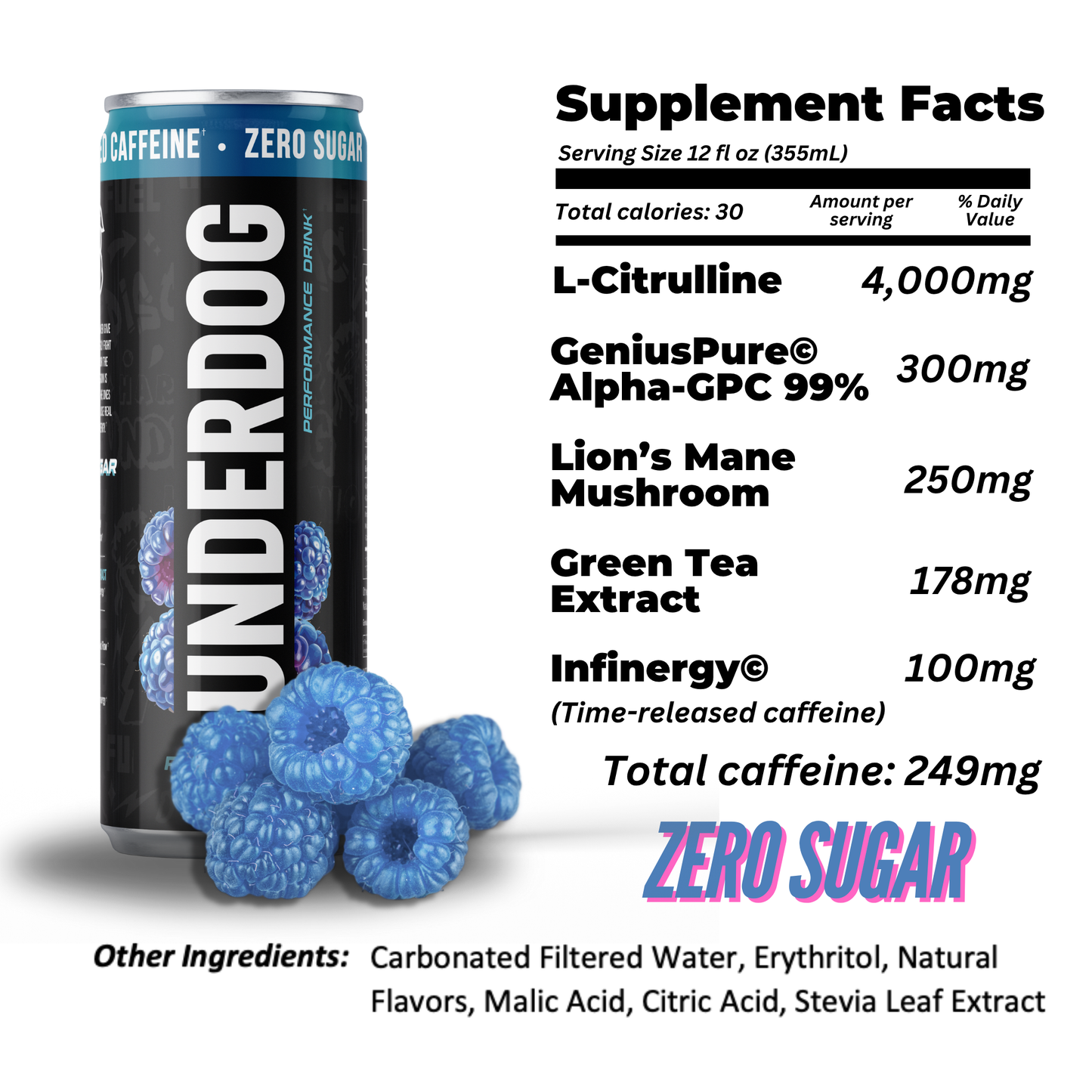
Caffeine from natural sources tends to come packaged with compounds that smooth out the delivery, a steadier climb instead of a sledgehammer, such as green tea extract.
The 2-second check: Does the label tell you where the caffeine comes from?
Check 2: Find the sweetener
"Zero sugar" is the biggest sleight of hand in the beverage aisle. Zero sugar doesn't mean zero sweetener—it usually means sucralose or acesulfame potassium (ace-K) did the job instead. And they're listed near the bottom of the ingredient panel, where almost nobody looks.
Here's why it matters: emerging research has linked artificial sweeteners like sucralose and ace-K to reduced gut bacteria diversity and an increase in inflammation-associated strains. Your gut microbiome isn't a side character, it's where the majority of your immune system lives and where most of your serotonin is produced. Trash it daily and no amount of caffeine fixes the fatigue.
The 2-second check: Flip the can. Scan the bottom third of the ingredient list. If sucralose or ace-K is there, you now know the tradeoff you're making.
Check 3: Doses, not buzzwords
"Contains B vitamins!" "With taurine!" "Ginseng blend!"
Cool. How much?
This is called fairy dusting. Adding a trace amount of a trendy ingredient so it can go on the front of the can, at a dose too small to do anything. If a brand lists an ingredient without an amount, it's decoration, not function.
The 2-second check: Every functional ingredient should have a number next to it. No number, no credit.
Check 4: Third-party tested, or just trusted?
This is the check almost nobody knows about — and it's the one that separates serious brands from everyone else.
Without independent testing, you are taking a brand's word for what's actually in the can. Labels can be wrong. Contamination happens. Certification programs like Informed Sport test products for banned substances and verify that what's on the label is what's in the can, batch after batch.
It's expensive. It's a pain. Most brands skip it. Ask yourself why.
(For the record: every can of Underdog is Informed Sport certified. Third-party tested, banned-substance free. We didn't do it because it was easy — we did it because "trust us" isn't a quality standard.)
The 2-second check: Look for a third-party certification mark. No mark means no verification.
Check 5: The overall picture
Put it together and you've got a 10-second filter you can run on any can in any cooler:
- Named caffeine source — they tell you where it comes from
- Clean sweetener profile — no sucralose or ace-K hiding at the bottom
- Real doses — numbers next to ingredients, not buzzwords
- Independent testing — a certification mark you can verify
If a can fails two or more of these, put it back. There's a better option a shelf away.
Why we're telling you this
Because we built Underdog to pass every single check and we'd rather teach you the filter than just tell you to trust us.
No sugar bombs. No mystery sweeteners. No mega-doses of synthetic caffeine. Just clean energy your gut can actually handle, verified by people who don't work for us.
You don't have to take our word for it. That's the whole point.
Flip our can. Read our label. Run the checklist.